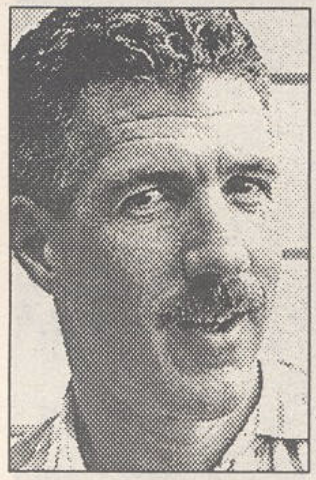
Warren Sonbert

June 26, 1947

-

May 31, 1995

ArtLifeMemories
Work in progress.

Warren was a filmmaker and film critic for the Bay Area Reporter. He taught filmmaking at SFAI.

Obituary
,
1995
Warren Sonbert (June 26, 1947 – May 31, 1995) was an American experimental filmmaker whose work of nearly three decades began in New York in the mid-1960s, and continued in San Francisco throughout the second half of his life. Known for the exuberant imagery of films such as Carriage Trade and especially for their intricate and innovative editing, he has been described as "the supreme Romantic diarist of the cinema"[1] as well as "both a probing and playful artist and a keen intellect reveling in the interplay between all the creative arts."[2] "Critics have tried to pin down Sonbert's cinema with catchy formulations," wrote David Sterritt, but "his works are not really diary films, since their carefully shaped contours are determined more by aesthetic insight than daily experience, and to compare them with 'explosions in a postcard factory' is to acknowledge their boisterous variety while missing their ecstatic precision."[3] A protégé of the avant-garde filmmaker Gregory J. Markopoulos but inspired by the work of Hollywood auteurs like Alfred Hitchcock and Douglas Sirk as well as by experimental cinema, Sonbert premiered his first, short films, to critical enthusiasm, in 1966 while a student at New York University. His first film, Amphetamine, featured a shock cut to two young men passionately embracing as the camera swooped around them in the youthful cinephile's homage to the 360-degree kiss in Hitchcock's Vertigo. The films that followed captured his friends at work and play, often in studios, galleries, or boutiques, and were frequently accompanied by rock songs of the recent period, whose energy added to the power of their rapid editing. In his second film, Where Did Our Love Go?, Sonbert said in 1967, "I used mostly old rock 'n roll—the saddest and most nostalgic music there is."[4]
,